ServicesWell Water Treatment
Well Water Treatment in Menomonee Falls
Nobody upstream treats the water that comes out of your own well. We choose filtration and softening to match what your report and your taps show, then install the system neatly beside the pressure tank, with drain, bypass and grounding finished to Wisconsin plumbing code.
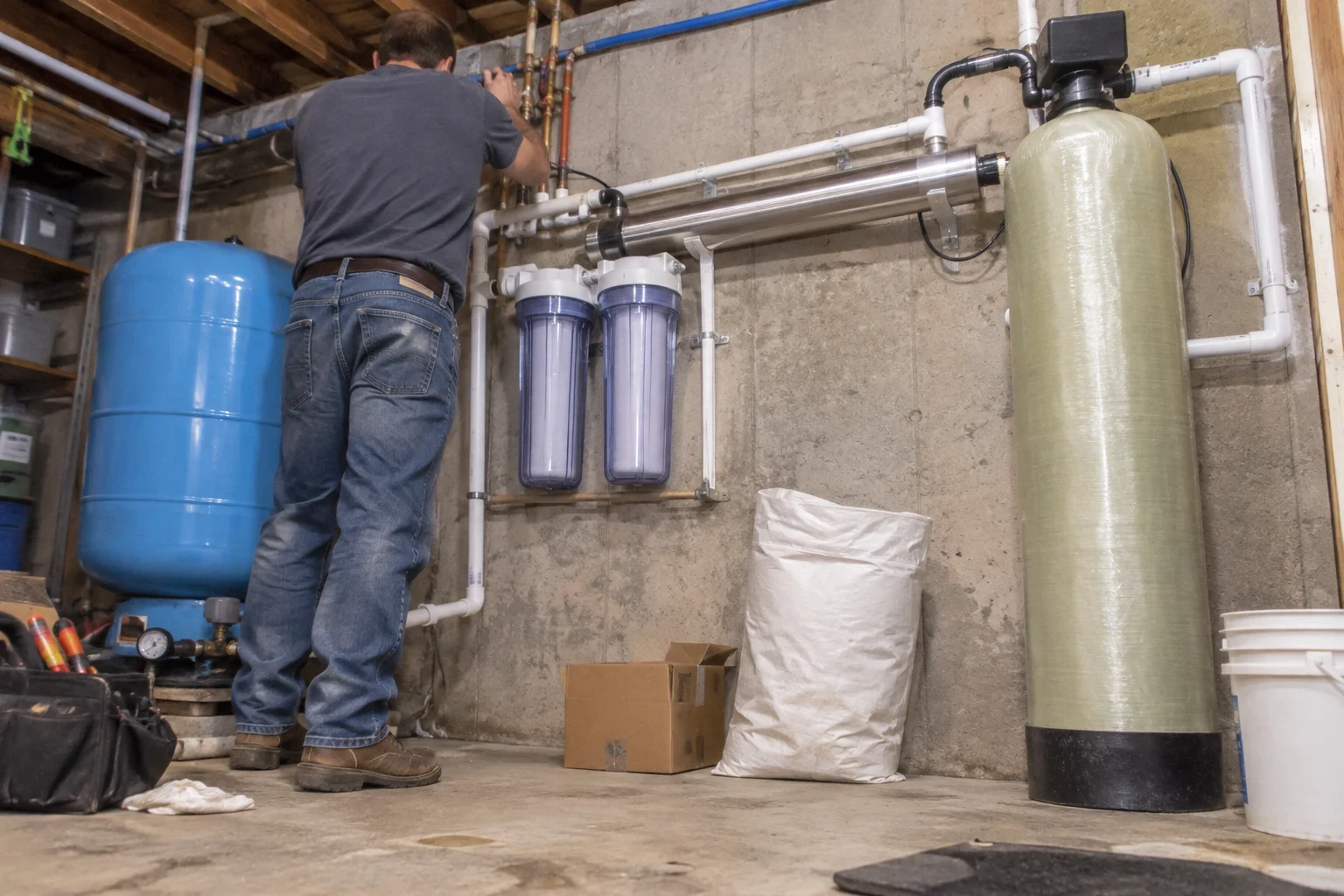
Equipment matched to your well, in the right order
No two wells carry quite the same water. In one house the problem is iron, showing up as orange rings in the toilet bowl. Next door it might be a sulfur smell from the hot tap, or hardness that leaves a crust inside the dishwasher. One unit seldom handles all of that, and stages installed in the wrong sequence can wear out a perfectly good filter early.
Our starting point is your water report and what you notice in daily use. From there we suggest the smallest set of equipment that actually solves the problem. Sometimes that is an iron filter feeding a softener, sometimes a sediment stage guarding everything after it, and sometimes a softener on its own when hardness is the only issue.
A licensed Wisconsin plumber installs every system. We show you where the drain line runs, why the bypass valve is there and what an inspector would check, so you can see for yourself that the work in your home was done properly.
What a well water installation includes
Iron and manganese removal
Oxidizing media filters that catch dissolved iron before it reaches fixtures, laundry and your water heater. We size the tank to your iron level and household flow so it backwashes on schedule instead of clogging.
Sulfur odor control
That rotten-egg smell comes from hydrogen sulfide. We choose an air-injection or oxidizing filter based on how strong the odor is and whether it shows on both hot and cold taps.
Softening after the filter
Hard well water is common across southeastern Wisconsin. A softener placed after iron treatment lasts longer and uses less salt. Our Water Softeners page covers that equipment in more detail.
Sediment protection
A sediment stage keeps sand and grit out of valves and media. It is a small part that protects the expensive ones.
Code-correct plumbing details
Bypass valve, an air gap on every drain line, and a bonding jumper where metal pipe is cut so your electrical ground stays continuous. These are the parts a careful inspector checks first.
Coverage on the hardware
The equipment carries lifetime coverage on tanks, valve ceramic discs and dry mechanical parts.
How a well shows it needs treatment
Rust marks that keep coming back
Orange or brown rings in the tub, sink or toilet are the mark of iron. Scrubbing removes them for a few days, then they return.
A smell like rotten eggs
If the odor is strongest the moment you open a tap, hydrogen sulfide in the well is the usual cause.
Clear water that changes color
Water that comes out clear, then turns cloudy or reddish in a glass or toilet tank, is dissolved iron reacting with air.
Chalky buildup and spotted glasses
Crusted faucet aerators, film on dishes and a water heater that pops and rumbles all point to hardness.
A softener that fouls too soon
Softeners are not designed to carry heavy iron. If yours clogs early or the staining has returned, an iron filter installed ahead of it is often the missing piece.
From first call to first backwash
- 1
We talk it through by phone
Describe what you see, smell or taste, and let us know if you have a recent lab report on the well. We go over financing options and arrange a visit to look at your equipment.
- 2
We inspect the pressure tank area
We note pipe size, available space, the route a drain line can take with a proper air gap, and the state of the existing plumbing. You receive a written quote, and it holds for 30 days.
- 3
We install with care
Water is shut off after the pressure tank, floors are covered and each stage is set in the correct order. Drain, bypass and bonding are finished to Wisconsin plumbing code, and if the job requires a permit, we take care of it.
- 4
We start it up and show you around
We run the first backwash and regeneration, look over every joint for leaks, and show you the bypass, the settings and the simple routine upkeep. Full payment is due only once the installation is done.
What moves the price of well water treatment
Price follows what is in your water and how much work the plumbing needs. A home with mild hardness and no iron needs far less than one with iron, sulfur and sediment together. Your quote lists each piece and why it is there.
- What your water carries
- Iron, manganese, sulfur and hardness each call for their own treatment. More problems mean more stages.
- Concentration and flow
- Higher iron levels and larger households need bigger tanks to keep up without pressure drop.
- Plumbing and drain access
- A finished basement, a long run to a floor drain or corroded pipe at the pressure tank adds labor.
- Existing equipment
- Sometimes an older softener can stay in service behind a new filter. Sometimes it has to go. We tell you which, and why.
Well water treatment questions
Something not covered here? (262) 440-9018
Do I need a water report before you can quote?
A recent lab report makes the quote far more precise. Numbers for iron, hardness and pH decide which equipment goes in and in what order. Without one we can work from what you describe at the tap, but we will suggest getting a report first so the system is sized on facts rather than guesses.
Will the backwash water hurt my septic system?
We check where the discharge will go before we recommend anything. A filter sized correctly for your water keeps backwash volume sensible, and the drain line is run with a proper air gap. If your setup raises a real concern, we lay out the options in plain terms.
Does this kind of installation need a permit?
That depends on how much plumbing the job changes and on the local municipality's rules. We look at the scope during the visit and tell you which applies. When a permit is required, pulling it is part of our job, not yours.
Can I add drinking water treatment too?
Yes. Plenty of well owners add an under-sink system for drinking and cooking water once the main treatment is in place. Our Reverse Osmosis page walks through how that setup works.
How does payment work?
You can finance through U.S. Bank Avvance, on approved credit. Payment in full comes once the installation is complete, not before. After you sign, you still have three business days to cancel if you change your mind.
Talk through your well water with us
Tell us what is showing up at your taps and we will explain the equipment, the code details and how financing works. Your quote is free and holds for 30 days.