ServicesWater Softeners
Water Softeners in Menomonee Falls
We install water softeners that keep scale out of your home's pipes, fixtures and water heater. Each unit is sized to your water, fitted with a bypass valve and an air-gapped drain, and installed by a licensed Wisconsin plumber.
What a softener does, and when it is the right call
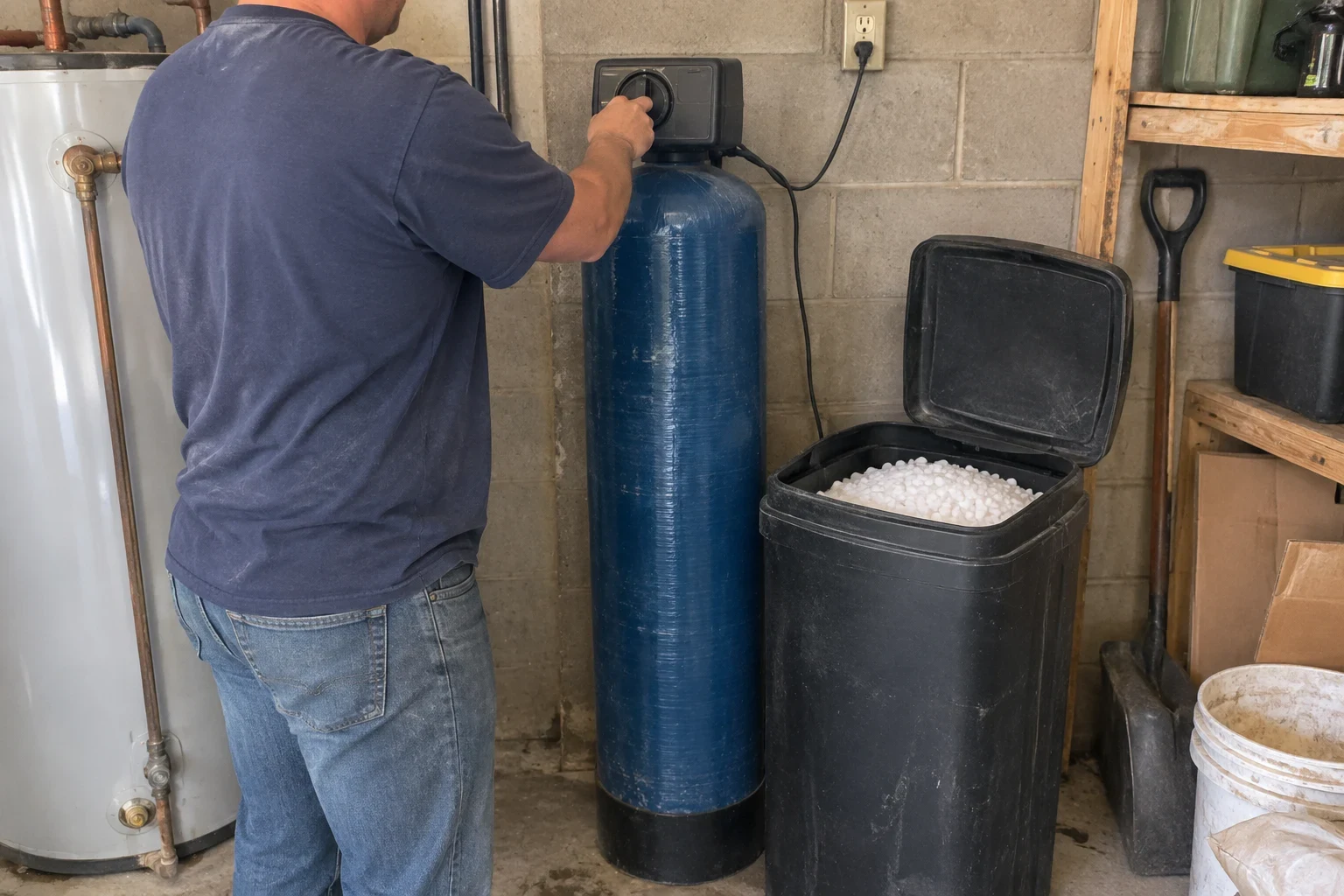
A softener is a resin tank and a brine tank working together. As water passes through the resin, calcium and magnesium trade places with sodium or potassium. Every so often the control valve flushes the resin with brine to recharge it, then sends that rinse water down the drain.
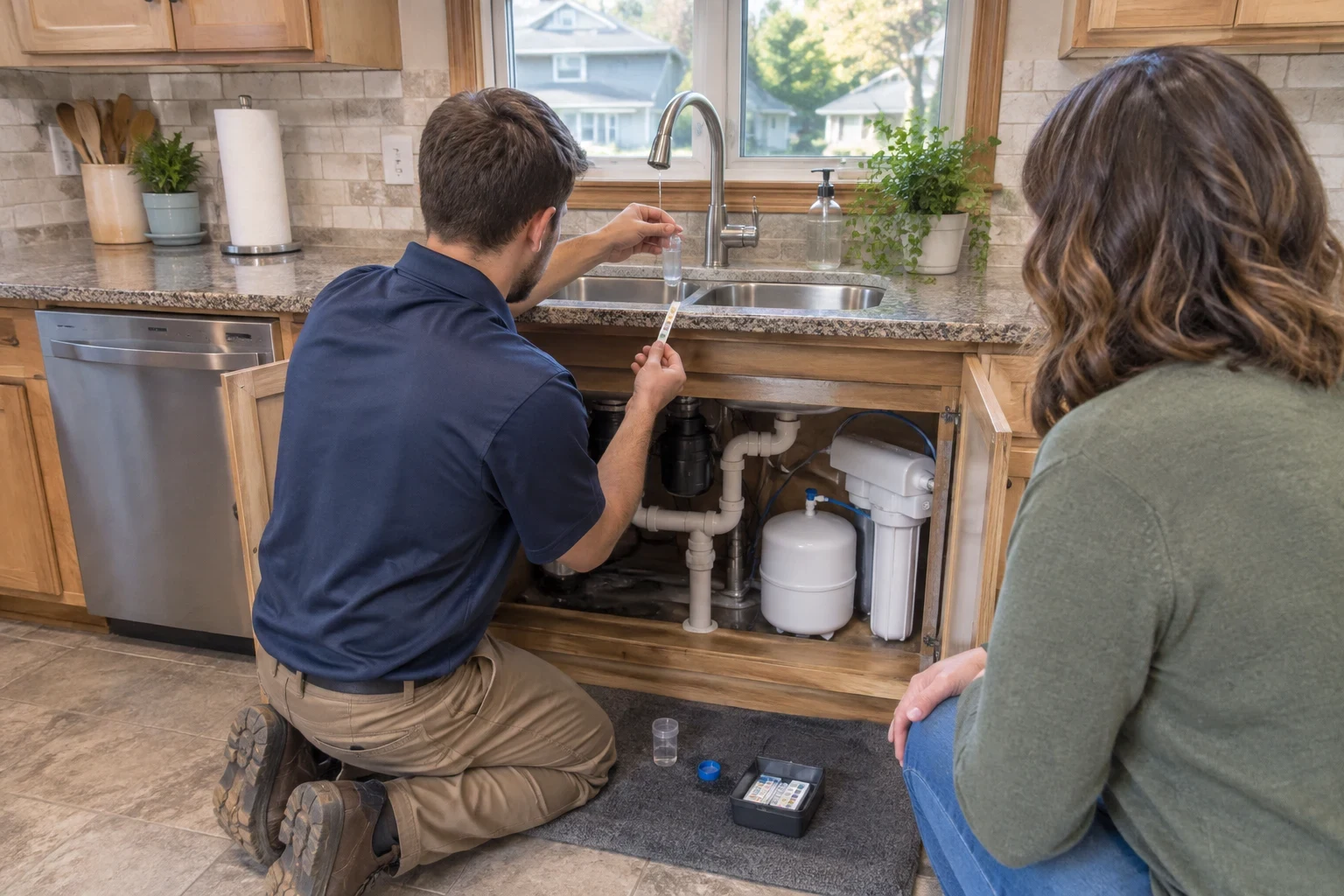
Hard water is common across southeastern Wisconsin, and it shows up as crust on faucets, film on glass and a water heater that slowly loses efficiency. If your concern is chlorine taste or odor, whole-home filtration or reverse osmosis is usually the better fit. Iron, sulfur smell or other private well issues belong under well water treatment.
Because a softener ties into both your water supply and your drain, it is plumbing work under Wisconsin code. We explain each requirement before we start, so you know why the drain line is routed the way it is and why the bypass sits where it does.
What the installation includes
- 01
Sizing to your water and household
We size the resin tank from your hardness number and how much water your home uses. You can bring the figure from your utility's water report or your well records. A unit that is too small regenerates constantly and wastes salt.
- 02
Bypass and shutoff valves
A bypass lets you keep water running to the house while the softener is serviced. We add isolation valves so future work does not mean shutting off your whole home.
- 03
An air-gapped drain line
Code requires a physical gap between the softener's drain line and the drain it empties into, so wastewater can never siphon back into your supply. We route the line to an approved receptor and secure it neatly.
- 04
Permit where it applies
When the village or your town requires a permit for the work, we pull it and handle the inspection scheduling.
- 05
Startup, settings and cleanup
We set the hardness and regeneration schedule, run a full cycle, check every joint for drips and leave the utility area clean. Then we walk you through adding salt and reading the valve display.
Questions about Water Softeners?
Call(262) 440-9018When a softener starts to make sense
Scale ringing faucets and showerheads
Hard, pale deposits collect around aerators and shower nozzles. Scrub them away and they creep back within weeks.
Cloudy glasses and spotted shower doors
Minerals stay behind on glass as the water evaporates, leaving a haze that even a good dishwasher cycle cannot clear.
A water heater that pops or crackles
Sediment settles on the bottom of the tank and snaps as the burner fires underneath it. Over time the heater uses more energy to give you the same amount of hot water.
Soap that barely foams
Minerals react with soap and shampoo, so you reach for more and still notice a dull film on skin and hair.
An aging softener losing ground
Your unit still goes through salt, yet scale keeps coming back. Worn resin or a tired valve is often the cause, and we give you a straight answer on repair versus replacement.
A drain hose without an air gap
On many older setups the discharge hose is stuck directly into a floor drain or standpipe. That arrangement invites backflow, and we correct it on every replacement.
How the work goes
- 1
A phone call first
We ask about your water source, your hardness number if you have it, the household size and where the current equipment sits. You get financing details and a free quote by phone.
- 2
A look at the space
We check the supply line, the nearest approved drain, the electrical outlet and the floor where the tanks will stand. Anything that affects code or cost is noted on your written quote.
- 3
Installation day
We shut off the water, remove the old unit if there is one, set the tanks and connect the bypass and supply. The drain line goes in with its air gap, and the valve is plugged in and programmed. In most homes the water is off for a few hours rather than the whole day.
- 4
First cycle and a tour of the valve
We run a regeneration, look over every joint for leaks and show you how the controls and brine tank work. You pay once the install is finished, not before.
What moves the price
Every quote is itemized, so you can see what each part of the job costs. The biggest variables are the equipment and the plumbing your home already has. Your quote holds for 30 days, and financing is available through U.S. Bank Avvance, on approved credit.
- Capacity and valve type
- Larger resin tanks cost more. A metered valve that regenerates on actual water use costs more up front than a timer valve but tends to use less salt.
- Distance to an approved drain
- If the nearest code-compliant drain is far from the tanks, the drain line run adds time and material.
- Condition of existing plumbing
- Corroded fittings, a missing shutoff or an outdated loop may need correcting before a new unit can be tied in properly.
- Removing the old unit
- Draining, disconnecting and hauling away an existing softener adds a modest amount of labor.
- Permit requirements
- Where a permit applies, the fee and inspection visit are listed on your quote.
Water softener questions
Do I need a permit to install a water softener?
That depends on the municipality and on what the job involves. Replacing a unit in the same spot is often handled differently from a new install that needs new piping. We confirm the rules that apply to your home and pull the permit whenever one is required.
Will softened water taste salty?
Few people can taste it. The sodium a softener adds rises with the amount of mineral it removes, so harder water means slightly more. The system can run on potassium chloride instead, and many households add a reverse osmosis system at the kitchen sink for drinking and cooking water.
What does your coverage include?
The tanks, the valve ceramic discs and the dry mechanical parts carry lifetime coverage. When we install your unit, we walk through what that covers on your specific model.
Why does the installation need a plumber?
The softener connects to both your water supply and your drain, and Wisconsin plumbing code governs each of them. That includes the bypass, the shutoff valves and the air gap on the drain line. Doing those correctly keeps your drinking water protected and leaves the work ready for inspection where one is required.
How often will I add salt?
It varies with your hardness, how much water you use and the type of valve. A bag or two a month is typical for many households. A metered valve, which regenerates only when the resin actually needs it, usually makes each bag last longer.
What if I reconsider once the paperwork is signed?
You can cancel within three business days of signing. And since payment is due only when the install is complete, nothing is owed up front either way.
Talk through a softener for your home
Tell us about your water and the space you have, and we will explain the options, the code requirements and the financing. The quote is free and holds for 30 days.